Leading on Technical Ice Course (LTIC)
Who is this course for?
The NZAC Leading on Technical Ice Course (LTIC) is designed for fit mountaineers who are able to look after themselves on 35-degree snow slopes, confidently leading traditional rock climbs, have good rope management skills and experience of camping in snow.
Prior to attending this course participants must have experience of easy alpine (non-glacial) mountaineering, be a NZAC Trad Climber (or equivalent skill set) and the fitness to enjoy multiple full days (7 hours) in the mountain environment.
COURSE SYLLABUS
Preparing For Technical Ice Climbing
- Clothing/equipment
- Trip planning resources (avalanche forecasts/weather forecasts/guidebooks)
- Weather
- Using aircraft for access
- Selecting appropriate objectives
Being And Moving On Technical Ice Climbs
- Movement skills for technical ice climbs
- Using technical ice tools and crampons on steep ice
- Ice anchors (ice screws and v-threads)
- Rock anchors
- Ice condition and characteristics
- Belaying a lead ice climber
- Rope management for single and multipitch ice climbs
Changing Circumstances
- Resting whilst on steep ice
- Use of avalanche safety equipment including transceiver search
- Retreating from technical ice climbs
COURSE OUTCOMES*
Preparing For The Environment
- The knowledge to select appropriate equipment and clothing for technical ice climbing
- An ability to plan trips and select routes according to their grade, condition and guidebook description
- An ability to interpret weather forecasts and observations with a focus on how this affects ice
- The awareness of basic safety principles regarding the use of aircraft to access the high mountains
Being And Moving In The Alpine Environment
- The knowledge of how to climb steep ice well balanced, efficiently and in control
- An understanding of how to efficiently and effectively place ice axes and crampons whilst climbing on technical ice
- An understanding of building quality anchors (ice screw, v-thread, snow bollard) and rock (nuts, cams, rock bollard) anchors
- The knowledge to assess the condition of ice and adapt accordingly
- The ability to place protection to protect a leader and second on technical ice routes
- The ability to retreat and descend routes using appropriate techniques (retrievable abseils, down climbing, lowering)
- The skills to efficiently manage the rope on single and multipitch terrain (block leading, swinging leads, multipitch abseils)
Changing Circumstances
- The knowledge of techniques to safeguard against a lead fall on technical ice routes
- The ability to confidently perform a companion rescue in the event of an avalanche
- An awareness of snow shelters appropriate for emergency situations
Someone who has these skills and those listed in the High Alpine Skills Course is considered a NZAC Advanced Mountaineer and is likely to have the skills and ability to travel on glaciated Aoraki Mount Cook Grade 3 terrain.
*Course outcomes may vary dependent on participant ability and course conditions. This is a guideline individuals must assess their own ability after a course.
COURSE OVERVIEW
Duration: 4 days
Season: July-August
Location: Wye Creek, Remarkables
Course Tutors: NZMGA Climbing Guides, IFMGA Mountain Guide
Ratio: 1:4
Cost: TBC when courses released
Progression: NZAC High Alpine Skills
INSURANCE
We recommend you take out travel insurance and/or personal insurance as part of your preparation for participating on NZAC instruction courses.
EMERGENCY SITUATIONS AND RISK DISCLOSURE
The Course Instructor will have Emergency Management Procedures in place and a Satellite phone to immediately contact rescue services in the case of an accident or emergency. It is encouraged to take your own personal locator beacon if you own one.
The natural environment and climbing activities can involve risks. While recognising that the course organisers and instructors are doing their best to manage these risks, and agreeing to accept their direction whenever required, you must accept personal responsibility for your own actions and safety. You must also accept to follow the instructions of the Course Leader and other instructors at all times.
All participants on the course are expected to be as honest and transparent as possible about their experience and fitness as part of their application. If a participant's lack of fitness/ability severely affects the running of the course the participant(s) may be asked to not participate for certain activities. Arrangements may be made to evacuate the participant(s) at their own cost. The instructor is the final arbiter in these decisions.
GEAR LIST
It is compulsory to email details (brands/style) and ideally a photo of your technical equipment, including a crampon fitted to a boot, to the course instructor prior to course start. This will ensure the gear is fit for purpose as there will not be time to remedy any gear issues prior to flying in. Some NZAC Sections hire ice climbing gear. It is the individual participants responsibility to hire and return kit.
Please be careful purchasing any climbing or mountaineering equipment online. The NZAC recommends kit is purchased from a reputable outdoor retailer. This ensures your kit meets international standards and is not fraudulent. See https://www.theuiaa.org/is-your-equipment-really-certified/ for more information.
| ITEM | SPECIFICATION | NUMBER |
| Mountaineering boots | Stiff mountaineering boots with good insulation are essential. Fully shanked. Plastic or leather. (La Sportiva Nepal, Scarpa Mont Blanc) | 1 pair |
| Harness | 4 Gear loops, adjustable leg loops | 1 |
| Helmet | Rated for mountaineering | 1 |
| Rope | 60 metres, single, dry treated rope | 1 |
| Locking carabiners | Not magnet lock | 3 |
| Snapgate carabiners | 2 | |
| Quickdraws | 4 | |
| Belay device | ATC or similar (not Grigri style) | 1 |
| 120cm Sling | Sown sling | 2 |
| Personal Anchor System | 1 | |
| Prussik Cord | 4-5mm x 2 (once tied with a double fisherman these should be bellybutton to eye length | 2 |
| V-thread hook | Bought ones preferred. Homemade acceptable | 1 |
| Ice screws 13-19cm | Modern. Ideally express style (BD express screw, Grivel 360 etc | 4 |
| Ice screw 22cm+ | Modern | 1 |
| Ice axes | Technical ice axes, pair, adze and hammer. Curved shaft, ideally with a grip rest. (Petzl Quark, DMM Apex, Grivel North Machine) | 1 pair |
| Crampons | Technical crampon that is well fitting to boots and has antiballing plates fitted. (Grivel G12, Climbing Technology Ice) | 1 pair |
| Snowshoes | For travel in soft snow conditions | 1 pair |
| Tent (you may stay in a rock bivvy, your instructor will advise if tent is needed | 2-person tent (please arrange to share tents if you wish). Tents must be suitable for the winter mountain environment. | 1 |
| Plates & cutlery | Mug, plate, spoon, knife. | 1 |
| Cooker | Plus fuel for 3 days (please arrange to share if you wish) | 1 |
| Cooking pot | For use on cooker | 1 |
| Poo pot | Poo pot and 12x corn starch bags | 1 |
| Poles | Recommended should you need to walk out/in | 1 pair |
| Avo kit | Modern transceiver with fresh batteries, probe & shovel | 1 |
| Head torch | Plus spare batteries | 1 |
| Sunglasses | AS/NZS cat 3-4 preferred | 1 pair |
| Ski goggles | 1 pair | |
| Sun protection | Sunscreen & lip balm | 1 |
| Large pack | 60-70L for getting your belongings into the mountains. Please ensure all your kit fits within this. | 1 |
| Sleeping bag | 650 fill minimum. (Temperatures could be as low as -15°C. | 1 |
| Sleeping mat | Foam or inflatable (inflatable with insulation recommended) | 1 |
| Water bottle/thermos | 1/5L minimum total capacity. Insulated | 1 |
| Personal toiletries | Including toilet paper | 1 |
| Personal first aid kit | Guide will carry a group first aid kit. Bring only personal items | 1 |
| Insulated Jacket | Down/synthetic (useful for belaying). Winter weight | 1 |
| Alpine shell jacket | Gore-Tex or equivalent | 1 |
| Alpine shell over trousers | Gore-Tex or equivalent | 1 pair |
| Hat | Warm | 1 |
| Neckwarmer/balaclava | 1 | |
| Windbreaker top | softshell | 2 |
| Thermal tops | Polypro or merino | 2 |
| Thermal leggings | Polypro or merino | 2 pairs |
| Mittens | Waterproof (for use belaying or around camp). | 1 pair |
| Climbing glove | Waterproof, insulated articulated gloves. (Good quality) | 1 pair (2 preferable) |
| Inner gloves | To be worn under your climbing gloves | 3 |
| Socks | Skiing or high cut tramping | 2 pairs |
| Jacket or jersey | Warm midweight wool or fleece | 1 |
OPTIONAL EXTRA ITEMS
Compass, Altimeter, Toe/Foot/Hand warmers, GPS
GEAR TIPS
BOOTS
To be able to stand on your front points safely and comfortably all day, boots need to be rigid (fully shanked). Plastic or leather is fine, but they need to be warm, waterproof and be able to take your crampons.
Examples
- La Sportiva Trango, Nepal Evos
- Scarpa Inverno, Mont Blanc
ICE TOOLS
Standard mountaineering axes won't do. You need a pair of proper ice climbing tools. S
Examples
- Black Diamond Viper, Fusion, Cobra
- Petzl Quark, Nomic
- Grivel Tech Machine, North Machine
CRAMPONS
Crampons must fit your boots securely with no chance of falling off with either automatic or semi-automatic bails, can have either vertical front points or horizontal with aggressive secondary points, two parts or fully rigid.
Examples
- Black Diamond Sabretooth or Cyborgs
- Grivel G14, G12
- Petzl Lynx, Sarken
ICE SCREWS
Please bring modern ice screws. One of your screws should be 22cm, the rest can be shorter.
HARNESS
Because you will require good gear loops to rack equipment and want to be comfortable at hanging belays, a good padded harness is idea. Best to choose a rock-climbing harness over a lightweight alpine harness.
ICE CLIPPERS
It is possible to lead ice climbs with your screws attached to your harness with a solid rubber band holding a big snap link carabiner in place. But a better option is the Black Diamond or Petzel ice clipper. You'll need two, one for each side of your harness.
SNOWSHOES
Necessary to travel from camp to the climbs. These can be hired from Small Planet Queenstown, Mountain Outdoors Wānaka, or Bivouac Christchurch. The Course Leader will confirm if these are required once the date decision is made (36 hours' notice). This will be based on snow conditions.
CLOTHING
A winter weight down jacket is essential: Cold is mandatory for ice climbing but being cold is not. You will need a good, hooded winter weight down or synthetic jaket to belay in, stand around in and relax at camp in.
GLOVES
It is very important to have a couple of pairs of warm gloves with you as they will invariably get wet. Leather insulated gloves like Black Diamond Patrol Gloves are recommended. Have a few pairs of light fleece gloves or interchangeable inners in a wind proof shell AND a warm pair of mittens for belaying and around camp.
THERMALS
You will get wet ice climbing so make sure you have dry thermals to get into in camp and a spare fleece top for this as well.
BASIC FIRST AID
Personal first aid kit with pain relief, plasters, strapping tape and bandage is bare minimum.
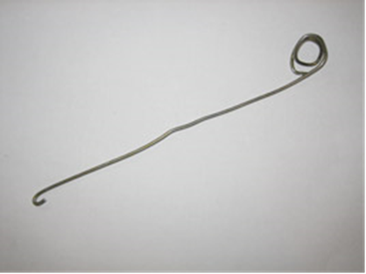
HOW TO MANUFACTURE A SIMPLE V-THREAD HOOK
Use a wire coat hanger or a bike spoke and cut to length. This should be no shorter than 22cm and the hook on the end needs to be sharp. File it with the small file on your swiss army knife or similar. Best if the loop at the other end if big enough for a carabiner. That way you can clip it onto you.