
Debate: New Ideas From An Old Bohemian
This article appears in the 2026 autumn issue of New Zealand Alpine Journal. We're reproducing it here because the intention of the author was for a broad debate on the issue of the appropriateness of bolts in the central Darran Mountains, and if protecting a space for adventure climbing is something the New Zealand climbing community might support. As it is hard to facilitate this debate in print, we're sharing it here for all to access. Use the comment function below to have your say.
By David Vass
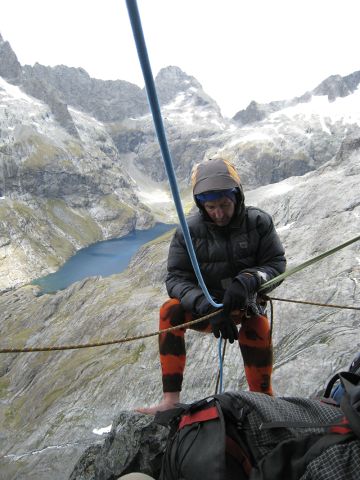
Times are a changin’ in the Darrans. For starters, most of you reading this will know where they are, some info about them and even some route names. You may have even read the new guidebook: the ‘Darran Mountains Rock’ indeed. This level of—I’m going to call it ‘mainstreamness’—is pretty new. For most of my time climbing there, this wasn’t the case, especially when referring to the mystical heart of the range, the Central Darrans*. After coming out from a mysterious off-grid week or two and being asked about our accomplishments, the answer of ‘we did a new route in the Central Darrans’ would usually elicit a response of ‘oh, cool’ and a blank look. Nothing much to relate to I guess, nowhere to place the pin on the scale of human achievement.
I didn’t really mind. The old bohemian in me enjoyed the freedom from the collective social ‘why’ or ‘how hard was it’, and restrained me from wanting to explain exactly that to the world. I always felt the value of the route was in the experience, in the adventure. There is a certain refreshment too, in not being understood, or at least only by the (insert here protagonists, dreamers, misfits as appropriate) that also share the joys of obscure, non-measurable activities. It seems a quaint concept these days.
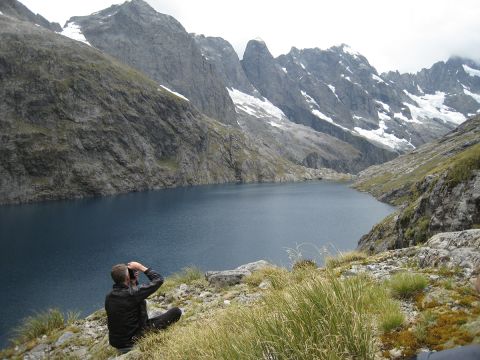
It’s important to leave space for the things you can’t properly measure, like the outdoors itself, the nature that enticed many of us to climbing in the first place. The Darrans community has always been a keen one. Small, but keen, and the thing that held it together—some shared obscure voodoo-type vibe, perhaps better described as the nature of adventure imposed by the place itself—really coalesced around exploring the unknown. That community, even if they didn’t all know each other directly, seemed to appreciate the obscure efforts of the other few, loved that other people were feeling something of the same experience—the one that’s hard to measure and quantify.
These days, a new route in the Central Darrans gets reported in the climbing media, while also remaining somewhat obscure simply because not many people have actually been there. Yet. But there’s change afoot—the dread influence of the mainstream is knocking on the door of the Central Darrans. Maybe it’s the articles, which tend to focus on the spectacular nature of the area, or all the newly-minted sport routes around Homer that act to make it all seem more accessible. Whatever it is, people now want more—and they want a guidebook. Herein lies danger, for with the guidebook comes the recognition, comes the mainstream, comes the same ways of doing things as everyone else, and then comes the thing that would most directly impact the essential value of the place for climbers—the bolts. The bolts that are not there now.
A bolted route anywhere is not the unknown, not even for the first ascentionists, and removing this crucial element of the new route adventure would relegate the Central Darrans from being the country’s premier adventure climbing destination to being just another rock climbing area, just with tougher access than normal. It would lose something unique—the experience of uncertainty, of meeting the place on its terms, not ours. As long as the community that values all those other things reject the concept of bolting in the Central Darrans, then I’m all for the other stuff; the topos, the articles, the Alpine Club powerpoint talks, etc. Take away the last of the unknown by bolting though—the ability to just walk up to the bottom of some stonking great piece of alpine rock and start up it without knowing the outcome—and we whittle away the values and motivations of the oddball dreamer misfit community, and replace it with mainstream ones. This is now the big question for first ascentionists in the central Darrans—who do you want to share the real stoke of your adventures with? Joe Bloggs or the ghost of Calum Hudson?**
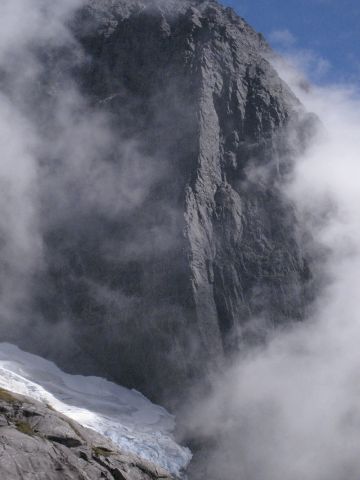
A direct start to the Hornley Arête is something that I and my friends have backed off more than once. It’s one of the greatest lines in the country and is still unclimbed. It’ll go on natural gear, but it will require a little more skill and bravery than we were able to muster at the time. I can envisage exactly what it’s going to be like—what the feeling will be—for the person who forges their way through the next section above the second belay, makes it up the wall above and breaks past the roof onto the arête. To boldly go where no-one has gone before will be a massive exhilaration, but only without the security of any bolts. With bolts in place it will just be another sequence of moves on a cool piece of rock that could be just about anywhere. It’s not what the place deserves and I’m pretty sure it’s not what the next adventure seeking protagonists want either.
Why not extend that respect to the area as a whole? There’s no infrastructure—no huts or tracks or bridges. The approaches are arduous and carrying drills and bolts seems silly. It seems instead, an ideal place to grow the already planted seed of what climbing was once all about. Surely there’s got to be somewhere for the boundaries and ethos of trad climbing to be tested? My feeling is that the Central Darrans perfectly suits an ethic of integration rather than exploitation, of fitting in rather than making it fit.
It’s going to be up to the greater climbing community to decide if and how it might want to manage a non-ferrous approach to the Central Darrans. I’m unsure how it would work in reality, but there are crags and rock types in England where it’s just accepted practice. One way might be to ‘allow’ bolting on the (somewhat grassy) valley walls, but have no bolts in the alpine zone (above the snow fields where the rock is clean and more featured). Whatever way it manifests, a bolt-free area would be the only one in this country, which I feel is a pretty good reason in itself. In an increasingly manufactured world, there should be some place for the naturalistic, the niche, the obscure, so I’m starting the debate here.
The Central Darrans for me is turangawaewae, with my attachment to place bound up in personal history. My appreciation of the area is rooted in how I feel about it. The emotions and experiences I’ve had there I always imagined were mine alone, but the more I think about it, sharing it with others and seeing their response has made them all the more resonant and meaningful. The idea that others could continue to visit the area and have the same quality—the same depth—of experience would give me a deep pleasure, and if that only works for a small bunch of dreamers and misfits, I’m good with that. You really don’t have to please everybody.
Note:
Apart from the odd one-off bolt of convenience in unusual spots and the Kaipo Wall, no bolts exist in the Central Darrans at present. I have nothing against the bolts already in place in the Lake Adelaide basin or indeed anywhere else in the Darrans or Darrans-adjacent zone—the climbing in those areas has been much improved by them. Generally though, the rock in the north of the range is well featured for trad gear and doesn’t need them. Especially the red stuff …
*I would define the Central Darrans as everything north of Lake Adelaide including that side of Moraine Creek. Perhaps the ridge north of Giffords Crack too. Definitely the catchments of the Donne, Cleft and Chasm Creeks and the Tutoko valley/plateau.
**Calum Hudson was the quintessential Darrans afficionado. He spent many months just hanging out in the area in the ‘70s and ‘80s, in the process putting up the odd classic like The Joker (‘Hard, dark, scary—but I like it’) and the seldom repeated Homegrown with Bill Denz. He was also the unofficial guardian of the determinedly non-ferrous crag of Mihiwaka near Dunedin.
It's quite cool to have an entire climbing area that will be opened to me once my trad climbing reaches a certain level. For now, there are plenty of places closer to the road to develop these skills!
Hear hear! Funny how hard it is to articulate the collective value of adventure. In an age of 'me and my experience', it can easily come across as egocentric. But Dave has done a sterling job.
That said, the individual value of adventure is also something real and worth preserving. I read something on Insta the other day that seemed to capture that nicely. Here's an abridged version:
A short but intense journey.
I had been dreaming for years of coming back to this place to climb this line. Of all the lines I’ve climbed and seen around the world, this is, for me, the most beautiful of them all.
This climb means a lot to me not because of its physical difficulty, but because of the mental challenge it brought. It pushed me into a state of fear, anxiety, and panic unlike anything I had ever felt before. Managing those emotions was far from easy… actually, I couldn’t. I dreamed of it. I wanted to climb the most beautiful climb in the world at all costs. But instead of controlling my mind and my fear, I let them control me.
During the warm-up, I was already nervous. And then… I started shaking. Before my first attempt, my hands and legs were trembling. I knew I could climb it but I also knew that if something went wrong, I could get seriously hurt.
I sat staring into the void, overwhelmed by everything at once fear, anxiety, pressure. Then I stood up and told myself: You will remember this attempt for the rest of your life.
Sometime later, I was standing on top. Pure emotion. Move after move. Position after position. My mind was no longer in control. My body was doing everything, while my mind simply watched as if it had stayed at the bottom, cheering from below.
Thank you for this incredible experience
Text credit? Elias Iagnemma, talking about climbing a boulder problem! Imagine what he'd write after climbing the Hornley Arete....
To collect enough information form stories and tales told, walls seen from pictures or viewed from from other climbs and adventures, and to be inspired enough, confident enough to get there, leave the ground and commit to the full unknown ahead is a different feeling of adventure.
Venturing up not knowing if there is another bit of gear , an anchor to be made or even a way to top out or get down. The experience you have is at the mercy of your decision making, creativity and what ever lays a head.
Has this been climbed before? Are you even taking the right line? whats the grade? Non of this matters and the only questions you have are; Venture further or retreat? Will there be an anchor up there or should I make one here? Can I down climb what I've just climbed searching for protection? Shall I commit to this un reversible move in quest of protection or easier terrain? Do we have enough rope to rap between anchors? Can I do it, or is today not the day or this route not the route?
These verticle adventures are why you spend your time climbing and homing in a variety of skills, and there should always be a blank canvas for these experiences.